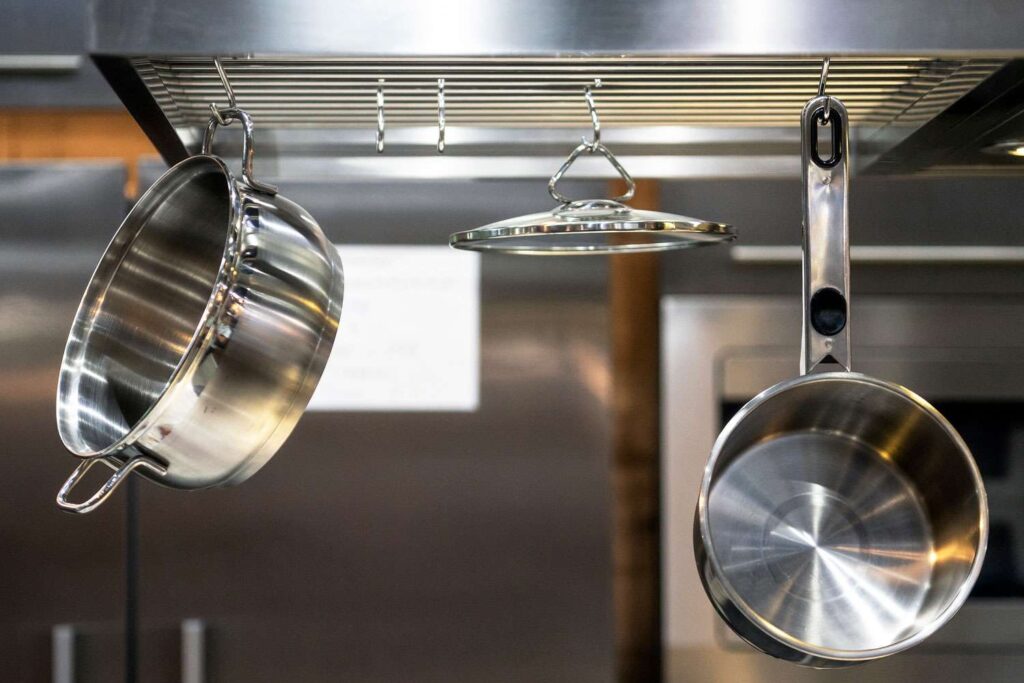
We often audit our pipes and our paints, but for many families, the most frequent source of daily lead exposure is the very pan they use to cook dinner. While “Modern Stainless Steel” is generally safe, certain cookware alloys, especially imported aluminum, traditional copper, and uncertified cast iron, can leach small amounts of lead into your food. In a historic Manhattan or Brooklyn kitchen, where “Heritage Cooking” is prized, these material risks are a hidden forensic reality. At Lead Free Homes, we specialize in the material integrity of the modern kitchen. Your cookware is an engineering component of your family’s health.
The Aluminum Alloy Challenge
Aluminum is a common material for cookware because of its excellent heat conduction. However, “Secondary Aluminum” (aluminum made from recycled scrap) often contains impurities, including lead. If your cookware is made of low-quality, uncertified aluminum—common in “Budget Imports” or traditional “Dutch Ovens”—it can leach these impurities during high-heat cooking. The “Leaching Rate” increases significantly when you cook acidic foods like tomatoes, vinegar-based sauces, or wine. The FDA warns that cookware materials are a primary pathway for trace metal ingestion. Accuracy in material selection is a requirement for safety.
We help families audit their “Daily-Use” pans to identify high-risk alloys. An easy engineering bypass is to switch to “Hard-Anodized Aluminum” or “Clad Stainless Steel,” where the reactive aluminum is sealed behind a layer of inert metal. This creates a “Chemical Buffer” that ensures your food never touches the underlying alloy. Knowledge is the ultimate filter for your kitchen. Respect the conductivity and the chemistry of your pans. Integrity starts at the heat-source.
Traditional Copper and the “Tin-Lining” Failure
Copper pans are the jewel of the historic brownstone kitchen. However, because copper itself is reactive, these pans are traditionally lined with “Tin” to prevent copper poisoning. In original Victorian-era copperware, this tin lining often contained high amounts of lead to improve its “Flow” during application. As the tin wears down through “Mechanical Scouring” (using metal spatulas) or “Thermal Fatigue” (overheating), the lead-tin mixture begins to flake directly into your food. At Lead Free Homes, we help owners evaluate their heritage copperware for safety. If the lining is grey, dull, or scratched, it is a high-risk object. Precision in maintenance is the secret to historic luxury.
We provide re-tinning protocols for historic collections. Modern re-tinniers use “Pure Food-Grade Tin,” which is lead-free. By “commissions” a professional restoration of your heritage pans, you can continue to use them while meeting 21st-century health standards. A pan is like a riser—it can be restored to full engineering integrity with the right material approach. Never trust a “Native” antique lining in a functional kitchen. Data-driven stewardship is the hallmark of a healthy home. Clear-headed cooking requires clear-headed materials.
Imported “Pressure Cookers” and the Brass Bolt Risk
A specific and growing risk we see in Northern New Jersey and Brooklyn households is the use of imported, non-certified pressure cookers. These devices often use “Leaded Brass” for the internal safety valves and the bolts that hold the handles in place. During the high-temperature, high-pressure cooking cycle, the steam extracts lead from these components and cycles it back into the food. This “Pressure-Steam Scouring” is incredibly efficient at moving metals. We help residents audit their “High-Pressure” appliances for lead risks. If it doesn’t have a UL or NSF seal, stay clear. Innovation in the kitchen must be balanced with engineering integrity.
We provide guides on “Lead-Free Sourcing” for modern appliances. By recognizing the role of secondary alloys, the danger of legacy tin-linings, and the risks of uncertified pressure components, you can move from architectural pride to total biological safety. Your kitchen is the “Chemical Heart” of your home—ensure its components are as safe as its foundation. Integrity starts at the center of the stove. Stay informed, stay proactive, and always Know Your Tap—and your pan. A lead-free meal is the ultimate reward of expert stewardship. Precision wins over sentiment every time.
Case Study: The “Artisanal Olla” Surprise
In a renovated loft in DUMBO, a home chef used a traditional “Clay Olla” for slow-cooking beans. A forensic audit after a routine health check revealed that the clay pot was leaching lead into every batch. The “Archaic” material was a source of chronic trauma. By switching to a modern, certified ceramic-coated cast iron pot, they maintained the culinary result without the chemical cost. It is a reminder that “Authentic” does not mean “Safe” in a historic world. We provide the forensic auditing of culinary tools to find these hidden bottlenecks. Trust the data, not the tradition.
“The Thermal-Cycling Trap” in Secondary Alloys
Cookware undergoes intense “Thermal Cycling” every day. In secondary aluminum alloys, this cycling causes “Interstitial Cracking” at a microscopic level. These cracks trap food particles and moisture, which then react with the lead impurities in the alloy, creating a concentrated “Metal Salt” that is released into the next meal. This “Salt Build-up” explains why an older, well-used pan often leaches more lead than a brand-new one. We help chefs identify the “End-of-Life” signals for their hardware. A pan’s integrity is a matter of its thermal history. Accuracy in your kitchen audit prevents chronic exposure.
Mechanical Investigation: The “Scour-Depth” Profile
The amount of lead leached from a pan is often a factor of its “Scour-Depth.” Every time you use a metal whisk or a green abrasive sponge, you create micro-grooves in the pan’s surface. In secondary alloys, these grooves expose “Interstitial Lead” that was previously buried deep within the metal matrix. Forensic microscopic analysis shows that “High-Abrasive” cleaning can increase lead release by up to 300%. We recommend switching to silicone or wood tools to preserve the “Surface-Skin” of your cookware. A pan’s integrity is a matter of its daily maintenance. Accuracy in your cleaning habits prevents chronic exposure.
Mechanical Investigation: The “Scour-Depth” Profile
The amount of lead leached from a pan is often a factor of its “Scour-Depth.” Every time you use a metal whisk or a green abrasive sponge, you create micro-grooves in the pan’s surface. In secondary alloys, these grooves expose “Interstitial Lead” that was previously buried deep within the metal matrix. Forensic microscopic analysis shows that “High-Abrasive” cleaning can increase lead release by up to 300%. We recommend switching to silicone or wood tools to preserve the “Surface-Skin” of your cookware. A pan’s integrity is a matter of its daily maintenance. Accuracy in your cleaning habits prevents chronic exposure.
Conclusion: The Architecture of the Cook
Cookware alloys represent a significant but avoidable lead risk in the modern home. By recognizing the chemical roles of secondary aluminum, the danger of legacy tin-linings, and the risks of uncertified pressure components, you can ensure your family’s safety with technical precision. Your home is a masterpiece of New York’s history—ensure its internal life is as safe and clear as its architectural heart. At Lead Free Homes, we provide the technical data and forensic strategies needed to help you find clarity and health in a historic world. Stay informed, stay proactive, and always Know Your Tap. A lead-free future is built one meal at a time. Safety is a matter of material truth.